Author: Liam Burke
Peer-Reviewers: Kathryn McClain and James Fleury
Website Developer: Kristen Figgins
I have been teaching adaptation studies since 2010 across film schools, English departments, and Media and Communications faculties both in Ireland and Australia. Regardless of the discipline, level, or location, I have found that students respond best to a practice-based approach to adaptation studies.
Practice-based learning is expected in career-focused disciplines such as medicine, law, and accounting. However, in the higher education sector, experiential learning is becoming “far more widespread and, almost universal” (Billet 6) as universities face expectations that all students “are adequately prepared to meet the demands of the twenty-first-century workplace” (Huggins 1). While this focus on graduate outcomes and the workforce may seem to limit critical evaluation and discovery, I found that a practice-based approach to teaching adaptation can offer more intimate engagement with the topic. While definitions vary across disciplines, my practice-based curriculum design keeps with Hamilton and Margot’s definition: an approach that “directly connects course content with embedded, hands-on learning experiences where students directly apply their learning by practicing skills and approaches in their field of study” (1).
The first adaptation studies module I designed was an English department seminar. In those initial deliveries, the main assessment was a traditional essay. This conventional assignment often resulted in students compiling lists of everything they believed filmmakers had “failed” to include in the latest Twilight or Harry Potter film adaptation. I wanted the students to move beyond fidelity debates and engage with a wider range of considerations. I believed that if students attempted to create their own adaptations, they would gain a deeper understanding of the creative, practical, and theoretical complexities involved.
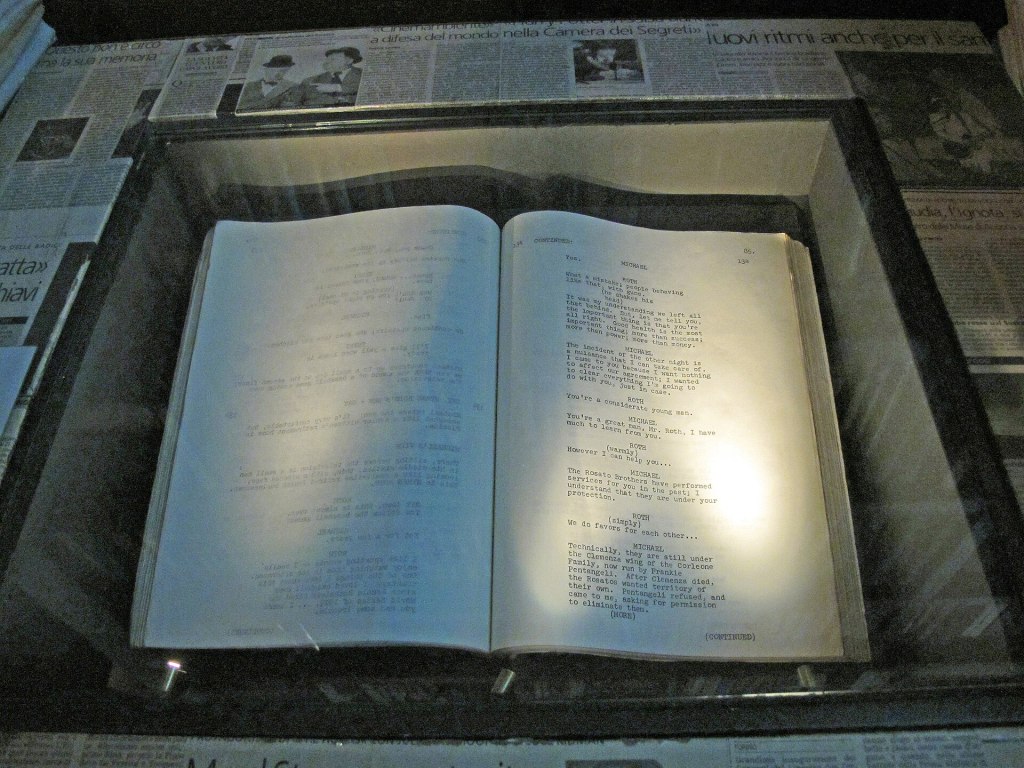
To achieve this fuller engagement, I tasked students with articulating theoretical concepts, including fidelity, medium specificity, and intertextuality, through a weekly screenwriting assignment. Students adapted a source material of their choice into a five-page shooting script. Each week, the students submitted a new draft of the screenplay, shaped by the discussions and readings of the previous week’s topic, along with a critical reflection covering the rationale for the changes. After several weeks, students submitted what they felt were the “best” screenplays—a synthesis of their various drafts and reflections.
In those first few deliveries, James Joyce’s Dubliners became a Global Financial Crash cautionary tale, Jean-Paul Sartre’s No Exit was stripped of its dialogue to embrace cinema’s omniscience, and the psychiatric report of spree killer Martin Bryant was transformed into a movie-of-the-week. The assignment significantly increased engagement. Most importantly, the critical reflections demonstrated more nuanced arguments than I had previously encountered with the conventional essay (and students even completed the weekly readings!).
As I refined my curriculum, I drew on scholarship about practice-based learning and saw many parallels with the “design principles” of authentic learning identified by Reeves et al., including “real-world relevance,” “collaboration,” and “polished products.” I also began looking for examples of practice-based approaches in adaptation studies. The earliest example I could find was the 1992 book Screenplay as Interpretation, in which Marilyn Hoder-Salmon adopted a practice-based approach to better analyse Kate Chopin’s The Awakening. Hoder-Salmon’s innovative methodology was to adapt the novel to a screenplay, explaining, “such intimate contact with both arts may uncover ideas […] that resist analysis through more typical means” (xi-xii). More recent adaptation studies scholarship has also explored practice-based pedagogies. In opening their collection, the Pedagogy of Adaptation, Dennis Cutchins, Laurence Raw, and James M. Welsh suggest that “since students learn best by doing, they should be required to adapt texts from one medium to another” (xv-xvi). Echoing this view, Thomas Leitch and Jamie Sherry have both proposed practice-based approaches to teaching adaptation.
More than fifteen years later, I still use a version of this assessment. Over time, I reduced the number of formal draft submissions, with tutorial-based workshops providing opportunities for feedback and reflection between submissions. This change made the assessment more manageable for students, tutors, and me while preserving its development focus. More recently, I introduced a week focused on AI, in which students added prompts to ChatGPT based on their screenplays. The class consensus was that their own work was better, but the exercise provided useful opportunities to discuss questions of creativity, authorship, and adaptation in the age of AI.
In my experience, a practice-based approach to teaching adaptation increases student engagement, produces higher-quality work, and results in a more rounded student experience.
Works Cited
Billett, Stephen. “Integrating Practice-Based Experiences with Higher Education.” Integrating Practice-Based Experiences into Higher Education, Springer Netherlands, 2015, pp. 1-26.
Chopin, Kate. The Awakening. Melville House, 2012.
Cutchins, Dennis, Laurence Raw, and James M. Welsh, eds. The Pedagogy of Adaptation. Scarecrow P, 2010.
Hamilton, Erica R., and Kelly C. Margot. “Using Practice-Based Learning to Extend Undergraduate Teaching and Learning.” International Journal for the Scholarship of Teaching and Learning, vol. 17, no. 1, 2023, p. 23.
Hoder-Salmon, Martha. Kate Chopin’s The Awakening: Screenplay as Interpretation. UP of Florida, 1992.
Huggins, Sujin. “Practice-Based Learning in Higher Education.” Library Trends, vol. 66, no. 1, 2017, pp. 1-12.
Leitch, Thomas. “How to Teach Film Adaptations, and Why.” The Pedagogy of Adaptation, edited by Dennis Cutchins, Laurence Raw, and James M. Welsh, Scarecrow P, 2010, pp. 1–20.
Reeves, Thomas C., Jan Herrington, and Ron Oliver. “Authentic Activities and Online Learning.” HERDSA 2002 Quality Conversations. Higher Education Research and Development Society of Australasia, Inc, 2002.
Sherry, Jamie. “Teaching Adapting Screenwriters: Adaptation Theory through Creative Practice.” Teaching Adaptations, Palgrave Macmillan, 2014, pp. 87-105.
Author Bio
Associate Professor Liam Burke is the Cinema and Screen Studies discipline leader at Swinburne University of Technology (Australia). Liam has published widely on adaptation and transmedia franchising, including the best-selling book The Comic Book Film Adaptation. Liam’s current research project, Everyday Adaptation, focuses on industrial, unofficial, and vernacular adaptations such as cosplay, toys, and pop culture food, which are often overlooked in traditional adaptation studies scholarship.
About the Adaptation Today Pedagogy Series
Adaptation Today is a free, accessible resource for all academics and students who are interested in adaptation, especially graduate students, contingent scholars, and early career researchers. The pedagogy series creates a space of community and resource-sharing, with rolling deadlines for submission. See our CFP page to see how you can submit your own syllabi, lesson plans, assessments, and blog posts for publication.


Leave a Reply