Author: T. A. Morris, University of Florida, LIT2110–World Literature: Ancient to Renaissance
Peer-Reviewers: Kathryn McClain and James Fleury
Website Developer: Kristen Figgins
Lesson Title: “L’Inferno (1911): Encountering Adaptation Through Silent Cinema”
Summary
This lesson covers a screening and discussion of the Dantescan silent film adaptation L’Inferno (1911). Italian and English language editions of this film are widely viewable and sourced from different prints. A significant difference in print content is an Angel that appears to help Dante and Virgil through the Gate of Dis and is missing from English-language versions. Students independently perceive this narrative gap and eagerly discuss it. Focusing on this moment in an introductory lecture allows for the reality of adaptation to be perceived in a manner beyond habitual considerations of medium specificity or fidelity. The material realities of the silent film era beget a broader understanding of what exactly adaptation is; likewise, students see that it’s possible for different copies of the same artwork to function as adaptations of each other. This lesson encourages students to have an exploratory perspective in subsequent adaptation discussions and gives heightened awareness both of early film history and the ubiquity of adaptation across media. Open class discourse then flows smoothly into topics such as imagining what students might do in creating their own adaptations of Inferno and how AI technologies can productively or harmfully interact with older media via their own adaptive processes.
Learning Objectives:
- Students will broaden their awareness of film history and their medial conception of Dante’s Inferno by viewing a silent, foreign feature film.
- Students will compare differences between prints of “the same film” to illuminate the relevance of materiality and variety in film history as an alternative to the common contemporary experience of digital monoculture.
- Students will gain comfort in thinking and talking about adaptation beyond conventions of fidelity and medium specificity.
- Students will discover how adaptational thinking might be utilized in their own academic and professional pursuit by considering their own interests and ideas about adapting Dante.
Required Materials
For this largely discussion-based lesson, only a standard classroom computer/projector setup is needed to display relevant clips and lecture slides. A classroom whiteboard and marker can be used to record students’ thoughts and ideas. Optionally, a Blu-ray player and copy of L’Inferno are necessary to host an outside-of-class screening.
Outline of Lesson
Course Background:
I begin my literature classes with the first part of Dante’s Divine Comedy, not only because it sets up the joke of students reporting to their parents after the first day that “our teacher told us to go to Hell.” Opening a survey course in this way is ambitious; however, I find that students appreciate starting with a familiar yet challenging work, one that they likely would never read on their own. In discussing the ambiguity of the transcendent, I give particular attention to the scene in Canto IX when an Angel appears to assist Dante and Virgil. The heavenly agent’s appearance is described with such words as “terrifying crash” and “violent shaking” that might be more akin to how one would describe a demonic force.
Homework Assignment
After finishing the poem, students view the 1911 Italian silent film adaptation L’Inferno. The final Dante class period covers the film as the first of a series of “adaptation days” on cinematic works based upon course texts. Several versions of L’Inferno are free (with advertisements) on YouTube, including an Italian restoration, an English language print with original intertitles, and a colorized and image-stabilized video by “moonflix” stretched to widescreen and probably employing AI to “clean up” (and flatten) the image quality. I host a special campus screening to allow students to watch together for extra credit. This opportunity promotes community-building and active participation culture; it also ensures the group watches the same edition of the film. I screen the Terror Vision Blu-ray, which is sourced from the same print as the English YouTube video. Many students cite this text as the oldest film they have seen, so in addition to adaptational context, the assignment also expands viewing horizons.
Lesson Intervention
L’Inferno adapts Dante with high fidelity, with most events from the poem unfolding in vignette-like scenes prefaced with an establishing intertitle. A striking moment occurs during the scene of Dante and Virgil’s waylaying at the Gate of Dis, separating the Fifth and Sixth circles of Hell. The intertitle preceding the scene describes how, after seeing the three Furies, “Dante is saved from being turned into stone by placing his hands across his eyes. An Angel appears who commands the gate to be thrown open.” After the eye-covering, a further intertitle appears describing the River Styx (Fig. 1) seemingly more appropriate to the preceding scene of crossing the river. The scene in front of Dis Gate then briefly continues as the damned souls in the river swim away from the banks before abruptly cutting, with the following intertitle introducing the Sixth Circle. The Angel opening the gate is never seen.
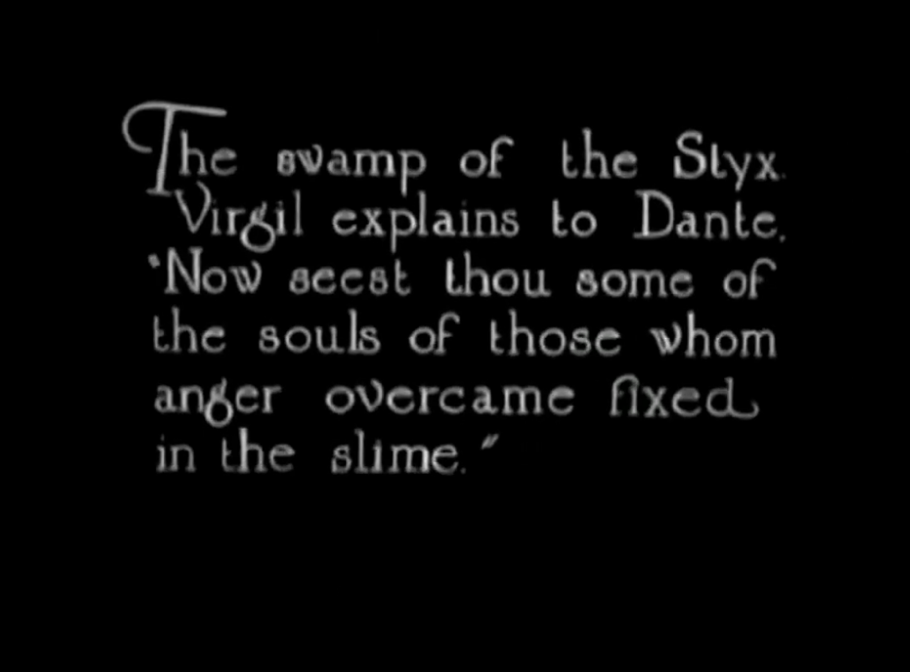
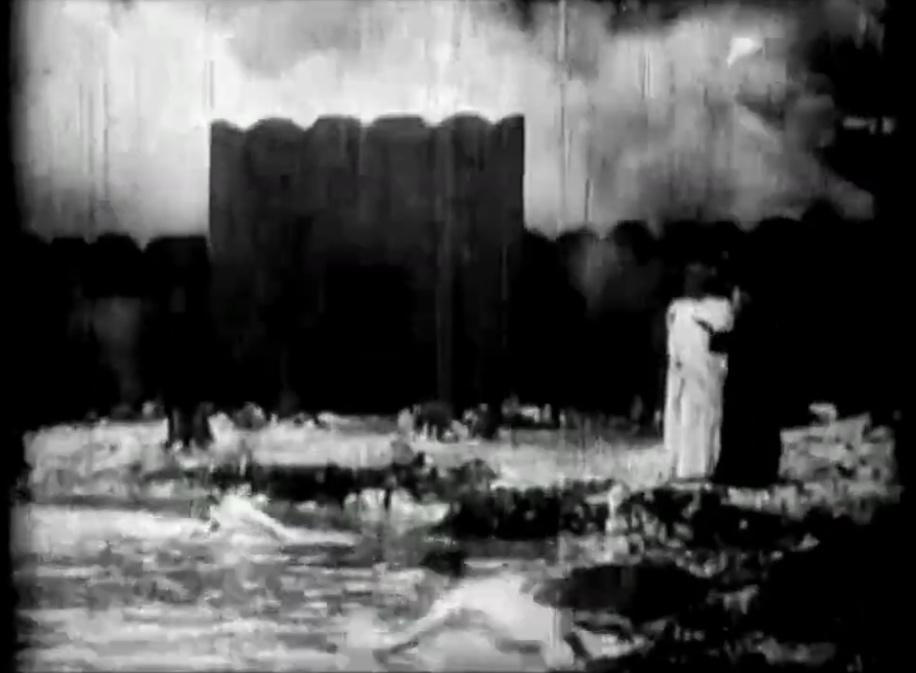
Fig. 1: English version of L’Inferno: An intertitle interrupts the scene, which terminates as the denizens of Hell flee from the absent Angel.
Viewing the Italian restoration, however, reveals a significantly longer scene in which the Angel arrives to open the gate (Fig. 2). There is no added intertitle about the River Styx in this edition. Given the poor image quality for the quick footage of the shades fleeing before the Angel appears, it seems that the most likely explanation for the missing footage is that the English print is too damaged to show the remainder of the scene, and the additional intertitle attempts to minimize the awkwardness of the scene transition.
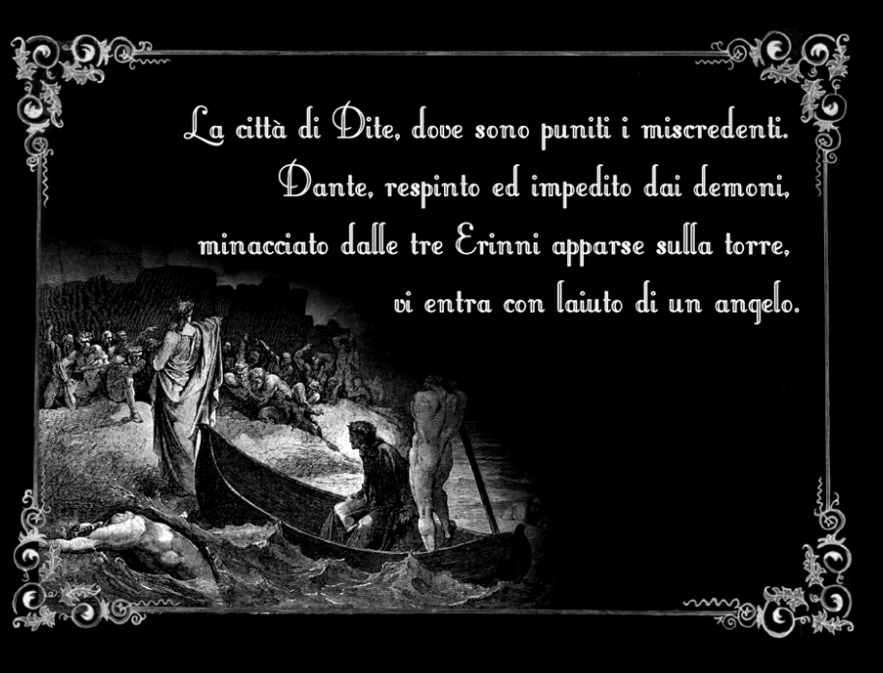
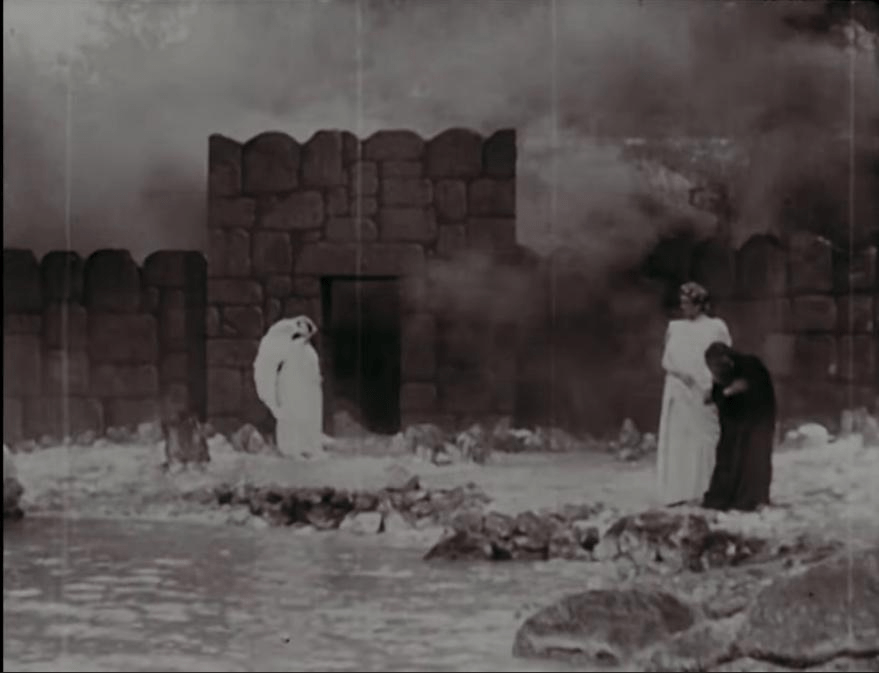
Fig. 2: Italian version of L’Inferno: The scene at Dis Gate plays in full, with the Angel opening the gate.
The “enhanced” moonflix video combines material from the English and Italian prints. The intertitles are from the English-language version, sometimes intercut with multi-stage events as they occur, lessening the repetitiveness of the “title-vignette” sequencing. Thus, in the Gate of Dis scene, the original intertitle is split into two–one on the Furies and one on the Angel. The scene plays in full, including the latter portion with the Angel that comes from the Italian print. This discerned re-editing of the available material suggests this project likely involved some human effort and oversight, and it is therefore not only an AI-“upscale.”
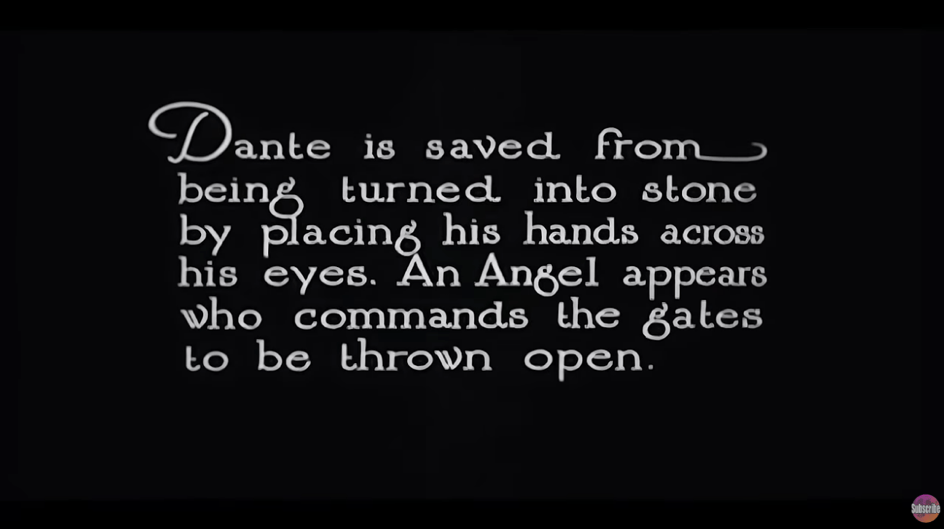
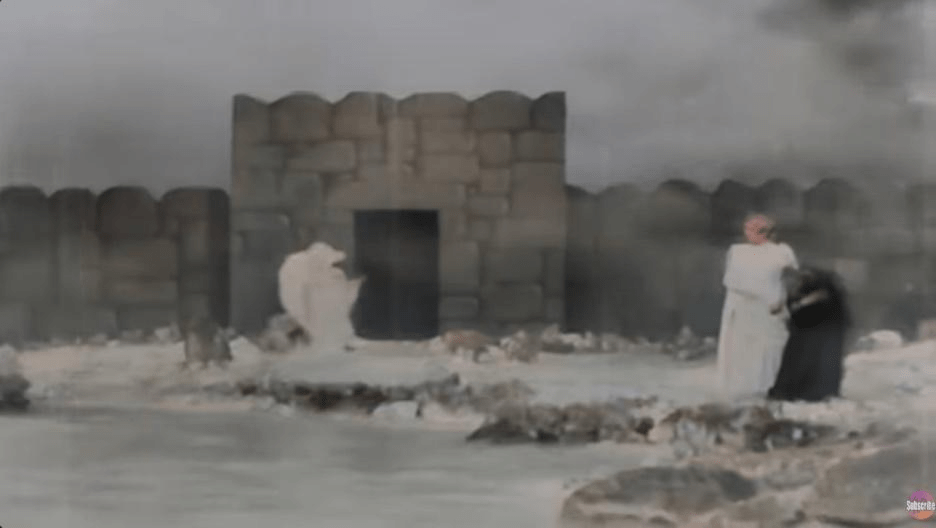
Fig. 3: moonflix “restoration” of L’Inferno: A composited version with English intertitles and Italian footage.
Lesson/Discussion Overview
After introducing L’Inferno’s place in film history and the subject of adaptation as a whole, I guide the discussion toward this pedagogically rich moment, asking if anyone noticed anything strangely missing from the film. A student from the group screening should point out the missing Angel. We then watch the full scene from the Italian print and brainstorm possible reasons for the incompleteness of the English version. Besides print damage, other theories include censorship (which is unlikely, given the hosts of demons shown without issue) and simple mishandling on the part of inexperienced localizers. Regardless of the reason, the stark contrast of the Angel scene across different prints of L’Inferno illustrates filmic physicality in both silent cinema and adaptation. Understanding differences in distribution when “film” was film imparts historical knowledge like the origin of the term “cut,” but it also conveys that L’Inferno is not just one adaptation of Dante but multiple since each hand-edited film print will be slightly (or in this case of this emphasized moment, substantially) different. Adaptation is then not only a consideration when moving from one media form to another, but in any endeavor yielding “repetition with variation.” The non-standardization of silent cinema thereby immerses students in adaptational modes outside the “book to film” pipeline without necessitating specialist materials above the level or outside the perceived interests of a first-year undergraduate. This intervention excites the classroom and makes clear how adaptation extends beyond strict fidelity discourses in this analysis, not of something omitted but of something missing, preparing students for future adaptation sessions. After establishing all this content through the Angel scene, a more free-form conversation for the remainder of the class period covers some of the following topics:
- Ask students why L’Inferno remains the most well-known and straightforward cinematic adaptation of Dante (Stan Brakhage’s experimental “The Dante Quartet” (1987) serves as an extreme contrast). Why has there not been a new version of Inferno produced with modern special effects? Why is Inferno adapted repeatedly, while Purgatorio and Paradiso are comparatively ignored?
- Ask students how they might direct their own film adaptation of Inferno: How would you adapt or add to the poem’s content and thematics?–Who might you cast as some of the characters, and why?
- Show a bit of the moonflix video and inquire if the students like the “restoration”? How might AI be useful and/or harmful to the original filmic image? How does combining a 20th-century film and 21st-century technology compare to adapting a 14th-century poem as a modern, moving image? Is this content a new form of adaptation, or is it in continuity with previous practices?
- Give opportunity for questions or comments on whatever aspects jumped out in students’ viewing. Does the film help them understand the poem better or differently with respect to topics such as its tension between sympathy and justice or its cultural/religious contexts?
Author Bio
T. A. Morris is a doctoral student in the English Department at the University of Florida. His research foci include adaptation studies and modernism, Polish literature and cinema, and Japanese new media. Teaching a variety of survey courses in cinema and literature as well as related special topics courses, he exposes students across a variety of disciplines to the interconnectedness of media and how adaptational thinking and processes are relevant to any pursuit of vocation. A 2025 recipient of UF’s Graduate Student Mentoring Award, he is also an editor for the comics and intermedia journal ImageTexT and a Graduate Fellow at the Hamilton School of Classical and Civic Education.
About the Adaptation Today Pedagogy Series
Adaptation Today is a free, accessible resource for all academics and students who are interested in adaptation, especially graduate students, contingent scholars, and early career researchers. The pedagogy series creates a space of community and resource-sharing, with rolling deadlines for submission. See our CFP page to see how you can submit your own syllabi, lesson plans, assessments, and blog posts for publication.


Leave a Reply