Author: Matthew Ari Elfenbein, Ph.D.
Peer-Reviewers: Kathryn McClain and James Fleury
Website Developer: Kristen Figgins
Course: “Film Criticism” at Florida Atlantic University
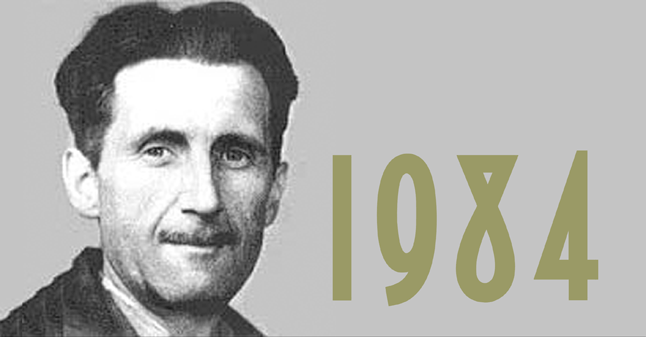
What I learned teaching adaptation today is that students can deeply engage with film adaptations like Nineteen Eighty-Four (Michael Radford, 1984) even without prior knowledge of the source material. The film’s bleak portrayal of oppression prompts students to consider their own experiences, creating a ‘fidelity of experience’ that bridges the gap between adaptation and viewer. In the classroom, in my case, a movie theater purposed for film screenings, I set up the first day about adaptation by focusing on fidelity and the novel-to-film production of Nineteen Eighty-Four. Naturally, in the syllabus, part of the reading assignment was to read the book about changing the truths of reality under an oppressive regime that George Orwell released in 1949. Rather than shifting gears and steering away from the schedule, I began to look deeper at what adaptation and fidelity truly meant to my students.
The course is Florida Atlantic University’s Film Criticism class, which is relatively malleable in terms of how it can be instructed. In my pedagogical design, attention is placed on how the film operates to impact the audience emotionally, viscerally, and philosophically, which is where the material comes in. Binding their lived experiences with Nineteen Eighty-Four, threaded with Robert Stam’s usage of fidelity, I attempted to reach the students at a few different levels in relation to their understanding of literature and film through adaptation. The class offers the flexibility to focus on specific elements, in this case, how the cinematography and novel’s text find conversion through a visual and tactile process of imagination of the reader and/or viewer.
The assignment was framed through suggested key themes as I only recommended reading the novel prior. Though many of them had read it in high school, others were approaching the material for the first time. Additionally, many were at least familiar with dystopian aesthetic and tones, especially since they experienced a substantial film cycle in their formative years concerning dystopian narratives (e.g., 2012’s The Hunger Games and 2014’s The Maze Runner). During class, we discussed some of the book’s passages: the more recognizable moments of Winston observing Julia for the first time, the few times the two secret lovers meet in the hidden room, and the torture portions of the narrative. For the students, this material helped situate how they can see an adaptation at work, especially poignant with the theoretical layering of fidelity (perhaps a coincidence when discussing a book and film where the characters cheat on their government by loving each other).
Concerning myself in the world of fidelity, Robert Stam’s “Beyond Fidelity: The Dialogics of Adaptation” was the assigned reading to start my course’s journey into adaptations. As many probably know, Stam focuses on the moralistic and cumbersome nature of pure translations that capture the original’s essence and soul. However, I was more intrigued by his mention, “Each medium has its own specificity deriving from its respective materials of expression” (59). The students are aware, especially through our discussion, of the many differences and modes between a novel and a film, but an interpersonal element is not often discussed. The film medium can induce a humanistic identification, something the imagination can merely mimic while reading books. In the case of Nineteen Eighty-Four, the face of the human on the screen becomes the connection that all students could view; the pain and suffering were seemingly shared and viscerally palpable in the following debrief. So, fidelity also carries the weight of human experience and representation of humanity on the screen from the ever-interpreted linguistics on the page.
All these readings of the term fall into the humanistic relationship that brings forth emotional connections, which Nineteen Eighty-Four masterfully expresses between media. Those students who did not know the novel’s descriptive and focalized expression of the main character, Winston Smith, were quickly drawn into the film’s use of close-ups to demonstrate the repressed expressions within the surveilled lives and the outward explosions of emotion that mask and appease the powers of Big Brother. My students, sitting in the dark theater, were immediately moved by this transferal of the materials’ essence and soul, projected through the terrifying images of torture, repression, and masquerade romances. Humanity offers “strict fidelity” between media because every student knows and can relate to an emotive and feeling body (Stam 55). Perhaps the essence of fidelity remains the ability to explore the essence of a media object and then alter it to adapt to the individual’s world, which is exactly the personal inflection that connects them with the film. Heading with culture, the fidelity of these themes is impactful, perhaps more so than a direct translation, which could never truly be. These lessons of corporeality through different perspectives of language, written and cinematic, are the strength that teaching adaptation provides to engage with material from a bodily lived experience.
Author Bio
Dr. Matthew Ari Elfenbein is a Visiting Instructor of Film and Media Studies at Florida Atlantic University, where he teaches courses that explore the intersections of cinema history, media theory, and screenwriting. His research delves into animated screendance and audience engagement with film, emphasizing Hollywood and European cinema’s impact on viewer identification and interaction with on-screen characters. This focus on audience dynamics enriches Dr. Elfenbein’s pedagogical approach, as he incorporates experiential learning that bridges academic analysis with practical, hands-on activities, benefiting both students and faculty. Dr. Elfenbein earned his Ph.D. from Florida Atlantic University and an M.A. from NYU Tisch’s Martin Scorsese Department of Cinema Studies. You can reach him at melfenbe@fau.edu, on Letterboxd @MattElf, or via his social links at linktr.ee/mattelfenbein.
About the Adaptation Today Pedagogy Series
Adaptation Today is a free, accessible resource for all academics and students who are interested in adaptation, especially graduate students, contingent scholars, and early career researchers. The pedagogy series creates a space of community and resource-sharing, with rolling deadlines for submission. See our CFP page to see how you can submit your own syllabi, lesson plans, assessments, and blog posts for publication.
 Adaptation Today
Leave a comment